.svg)
Self-Employed in the UK: How the System Works (2025–2026)
An information-only overview of the UK self-employed system for 2025–2026. This article explains how HMRC structures self-employment, how registration, tax years and reporting cycles connect, and why clarity at system level helps avoid delays and confusion — without legal, tax or financial advice.
Clear, information-only updates on how key UK systems work — from healthcare and identity checks to everyday administrative steps.
No opinions. No advice. Just structured information to help you navigate your first stages in the UK with clarity and confidence.
Self-Employed in the UK: How the System Works (2025–2026)
Becoming self-employed in the UK is not a licence, a company type or a profession.
It is a tax status within the HMRC system, defined by how income is reported and assessed.
This guide provides a calm, structured, information-only explanation of how the self-employed system works in 2025–2026, based on publicly available HMRC frameworks.
It does not provide legal, tax or financial advice.
1. What “Self-Employed” Means in the UK System
In the UK, being self-employed means that:
- you are personally responsible for declaring your income
- HMRC does not calculate your tax automatically
- income and expenses are assessed per tax year, not per month
- liability is determined after reporting, not at the moment you earn income
Self-employment is not registered through Companies House and does not create a separate legal entity.
2. How HMRC Identifies a Self-Employed Individual
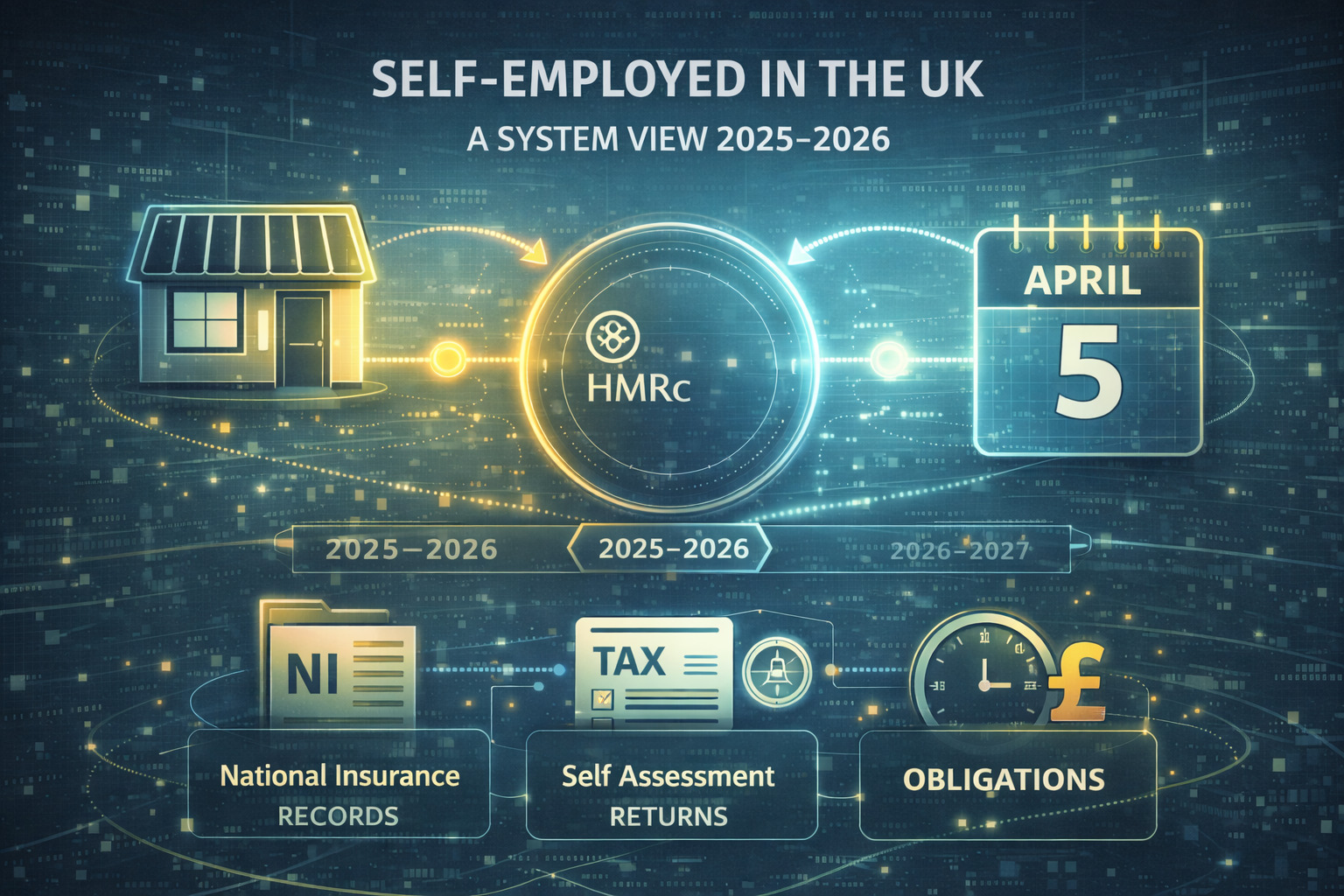
HMRC links self-employment to:
- your personal identity
- your National Insurance number
- your Self Assessment tax record
Once registered, HMRC expects ongoing interaction through Self Assessment until the status is formally ended.
3. Registration: How the Status Enters the System
Self-employment is registered with HMRC, not with Companies House.
The registration process typically includes:
- notifying HMRC that you are self-employed
- creating or updating a Self Assessment record
- aligning your record with the current or upcoming UK tax year
Registration does not:
- approve or licence your activity
- confirm tax amounts
- replace record-keeping obligations
4. The UK Tax Year and Self-Employment
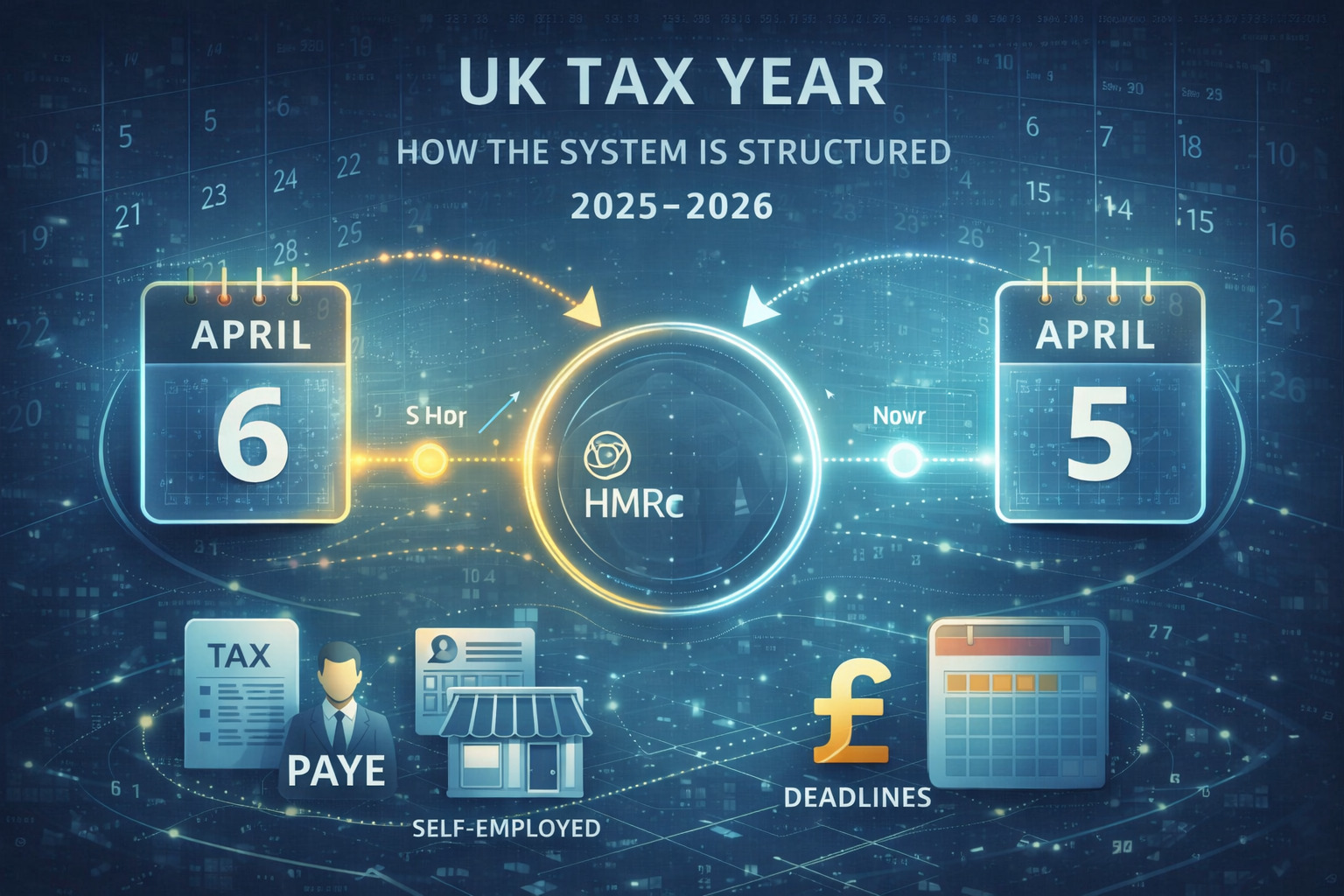
The UK tax year runs from 6 April to 5 April.
For self-employed individuals, this means:
- income is assessed within tax year boundaries
- reporting happens after the tax year ends
- tax is usually paid after submission, not in real time
Understanding the tax year is central to avoiding late filings or unexpected liabilities.
5. Self Assessment: How Reporting Works
Self-employed income is reported through Self Assessment.
This process involves:
- declaring total income
- declaring allowable expenses
- calculating taxable profit
- submitting a return after the tax year ends
HMRC uses this information to determine:
- Income Tax
- National Insurance contributions (where applicable)
6. Payments and Timing (System View)
In many cases, self-employed individuals encounter:
- payment deadlines after submission
- advance payments based on previous years (where applicable)
- adjustments once final figures are confirmed
These are system mechanics, not penalties.
7. Common Misunderstandings
Newcomers often assume that:
- registration means tax is calculated automatically
- tax is paid monthly like PAYE
- no action is needed until income becomes “high”
In practice, timing and accuracy matter more than income size.
Final Thoughts
Self-employment in the UK is a reporting-based system, not a permission-based one.
When registration, tax year alignment and reporting are understood at system level, the process becomes predictable and manageable.
A structured, information-only understanding helps reduce confusion and delays.