.svg)
Your First 30 Days in the UK: A Structured Onboarding Guide for Newcomers
An updated evergreen overview of the first 30 days in the UK, explaining how digital identity, eVisa access, share codes, NIN, banking, renting, council tax, GP registration, official letters and income records connect within the wider administrative system.
Clear, information-only updates on how key UK systems work — from healthcare and identity checks to everyday administrative steps.
No opinions. No advice. Just structured information to help you navigate your first stages in the UK with clarity and confidence.

Your First 30 Days in the UK
A Structured Onboarding Guide for Newcomers
Arriving in the UK can involve several administrative systems at the same time.
Identity access, immigration-status checks, address records, work onboarding, renting, healthcare, banking and official correspondence may all appear close together during the first month.
This guide provides a calm, structured, information-only overview of the key UK systems newcomers may encounter during their first 30 days.
It does not provide legal, immigration, financial, tax, housing or medical advice.
1. Digital Identity and UKVI Access
A clear digital identity is now one of the most important foundations for UK onboarding.
In 2026, many immigration-status and verification routes are connected to:
• eVisa
• UKVI account
• GOV.UK One Login
• identity-document consistency
• secure account access
• share codes for specific checks
For people with digital immigration status, the UKVI account is often central to viewing status and generating share codes.
This is why consistent personal details matter.
Name, date of birth, passport details, email access and recovery details may affect how smoothly digital services function.
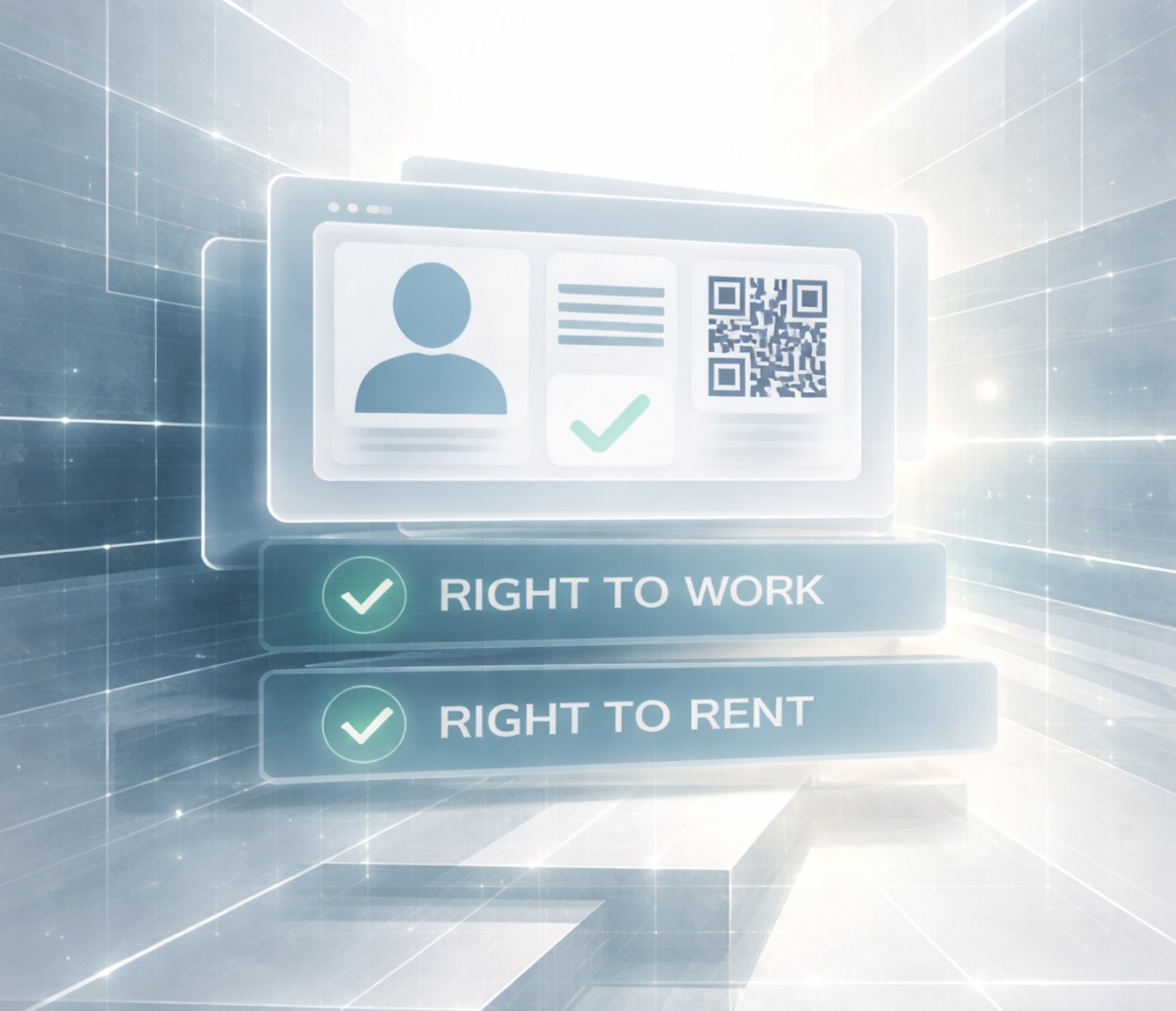
2. Right to Work and Right to Rent Checks
Newcomers may need to prove different rights for different purposes.
Right to Work relates to whether a person can work in the United Kingdom.
Right to Rent relates to whether a person can rent residential accommodation in England.
These checks may both involve a share code, but the codes are purpose-specific.
A share code created for an employer is not the same as a share code created for a landlord.
The checker usually needs:
• the correct share code
• the person’s date of birth
• the correct official GOV.UK checking route
This distinction helps avoid confusion during employment or renting onboarding.
3. National Insurance Number
A National Insurance number, often called a NIN, connects a person to the UK tax and National Insurance system.
It may be relevant for:
• employment records
• payroll
• tax records
• National Insurance contributions
• some benefit or pension-related records
Some people may already have a National Insurance number shown through their eVisa or previous status documents.
If a person does not have one and plans to work, they may need to apply through the official route.
At a system level, the NIN helps connect work, tax and contribution records.
4. Banking and Financial Onboarding
Opening or preparing for a UK bank account often depends on several data points aligning.
Banks and regulated financial institutions may consider:
• identity documents
• immigration or residence status where relevant
• UK address information
• contact details
• source of funds or income context
• credit and risk checks
• internal compliance requirements
A bank account is not only a payment tool.
It can become part of a wider administrative record involving income, address history, payments and future financial checks.
For newcomers, limited UK address history or limited credit history may create additional verification steps.
5. Address History and Proof of Address
In the UK, an address is more than a place of residence.
It often acts as a structural data point across several systems:
• banking
• credit reference agencies
• tenancy records
• council tax
• NHS registration
• employer screening
• official correspondence
Address history and proof of address are not the same.
Address history is the timeline of where a person has lived.
Proof of address is evidence connecting a person to a specific address at a specific point in time.
Newcomers may have limited UK address history at first.
This does not automatically mean a problem, but it can affect how quickly some systems verify identity or risk.
6. Renting in England and Tenancy Records
For newcomers renting in England, the rental process may connect several systems at once.
A rental journey may involve:
• viewing advertised rent
• signing a tenancy agreement
• Right to Rent checks
• tenancy deposit records
• rent in advance
• address records
• council tax administration
• official written communication
From 1 May 2026, private renting in England changed under the Renters’ Rights Act.
The reformed system affects areas such as tenancy structure, rent in advance, rental bidding and written tenancy information.
Right to Rent remains a separate Home Office check.
A tenancy agreement and a Right to Rent check are connected in the rental journey, but they are not the same system layer.
7. Council Tax and Local Authority Records
Once a person starts living at a UK address, local authority records may become relevant.
Council tax is administered by local councils and is linked to the property and household circumstances.
Local authority records may connect with:
• address occupation
• council tax registration
• official letters
• billing periods
• exemptions or discounts where applicable
• changes in household circumstances
For newcomers, council tax can be one of the first systems where a UK address becomes an administrative record.
This is why address accuracy and written communication matter.
8. GP Registration and NHS Access
Registering with a GP surgery is an important step for accessing routine NHS care.
GP registration may involve basic personal details such as:
• name
• date of birth
• address
• contact information
• previous medical information where available
NHS guidance explains that a person does not need ID, proof of address or proof of immigration status to register with a GP surgery.
Having an NHS number can make it easier to find previous medical records, but it is not required in order to register.
At a system level, GP registration helps connect a person to local healthcare access and future NHS records.
9. Official Letters and Written Records
In the UK, official letters and written notices still play an important role.
They may come from:
• HMRC
• NHS services
• local authorities
• landlords or letting agents
• banks
• employers
• government departments
Written records help show:
• timing
• address details
• responsibility
• official decisions
• instructions from a system
• audit trail
For newcomers, official letters may feel slow or old-fashioned, but they often remain part of how UK systems create traceable records.
10. Income, Tax Year and HMRC Records
UK income and tax records are structured around the UK tax year.
The UK tax year runs from 6 April to 5 April.
Income-related systems may involve:
• PAYE employment records
• Self Assessment where relevant
• HMRC online access
• National Insurance records
• income reporting
• Making Tax Digital for affected taxpayers
Not everyone needs the same tax route.
An employee, a self-employed person, a company director and a landlord may interact with HMRC in different ways.
This article does not provide tax advice.
It explains that income records sit within a wider system of reporting, timing and official access.
11. Credit History and UK Financial Visibility
Credit history in the UK is not simply a score.
It is a data layer built from records such as:
• address history
• bank and credit accounts
• payment behaviour
• electoral register information where applicable
• public records
• lender reporting
Newcomers often have limited UK credit history because the system has not yet built many local records.
Limited credit history is not the same as negative credit history.
It usually means the system has less UK-based data to assess.
This can affect banking, mobile contracts, tenancy checks and some financial decisions.
12. Why the First 30 Days Can Feel Complex
The first 30 days may feel complex because many systems overlap.
A person may be trying to arrange:
• identity access
• work checks
• housing
• address records
• GP registration
• banking
• council tax
• official correspondence
• tax or employment records
The difficulty often comes not from one single task, but from the way systems depend on consistent information.
A mismatch in name, date of birth, passport details, address format or email access can create delays across several routes.
13. A Structured Way to Understand the First Month
The first month in the UK is easier to understand when the systems are grouped into layers.
The main layers are:
• identity and digital access
• immigration-status verification where relevant
• work and income records
• housing and address records
• healthcare access
• banking and financial visibility
• local authority administration
• official correspondence
Each layer has its own function.
Seeing the layers separately helps reduce uncertainty and makes the onboarding process easier to interpret.
Final Thoughts
The first 30 days in the UK are not only about completing individual tasks.
They are about becoming visible to several administrative systems in a consistent way.
Digital identity, share codes, address records, tenancy documents, GP registration, banking and official correspondence all contribute to a wider onboarding structure.
Understanding how these systems connect helps newcomers approach the first month with more clarity and less uncertainty.
Auralen Note
Auralen provides structured, information-only clarity for people who need to understand how UK administrative systems fit together.
Auralen does not act on a client’s behalf and does not provide legal, immigration, financial, tax, housing or medical advice.

.jpg)