.svg)
Identity Data Alignment in the UK: How Administrative Systems Cross-Reference Information
An evergreen system-level overview of how identity data alignment functions within UK administrative architecture - including cross-referencing between HMRC, Companies House, banking and NHS systems.
Clear, information-only updates on how key UK systems work — from healthcare and identity checks to everyday administrative steps.
No opinions. No advice. Just structured information to help you navigate your first stages in the UK with clarity and confidence.
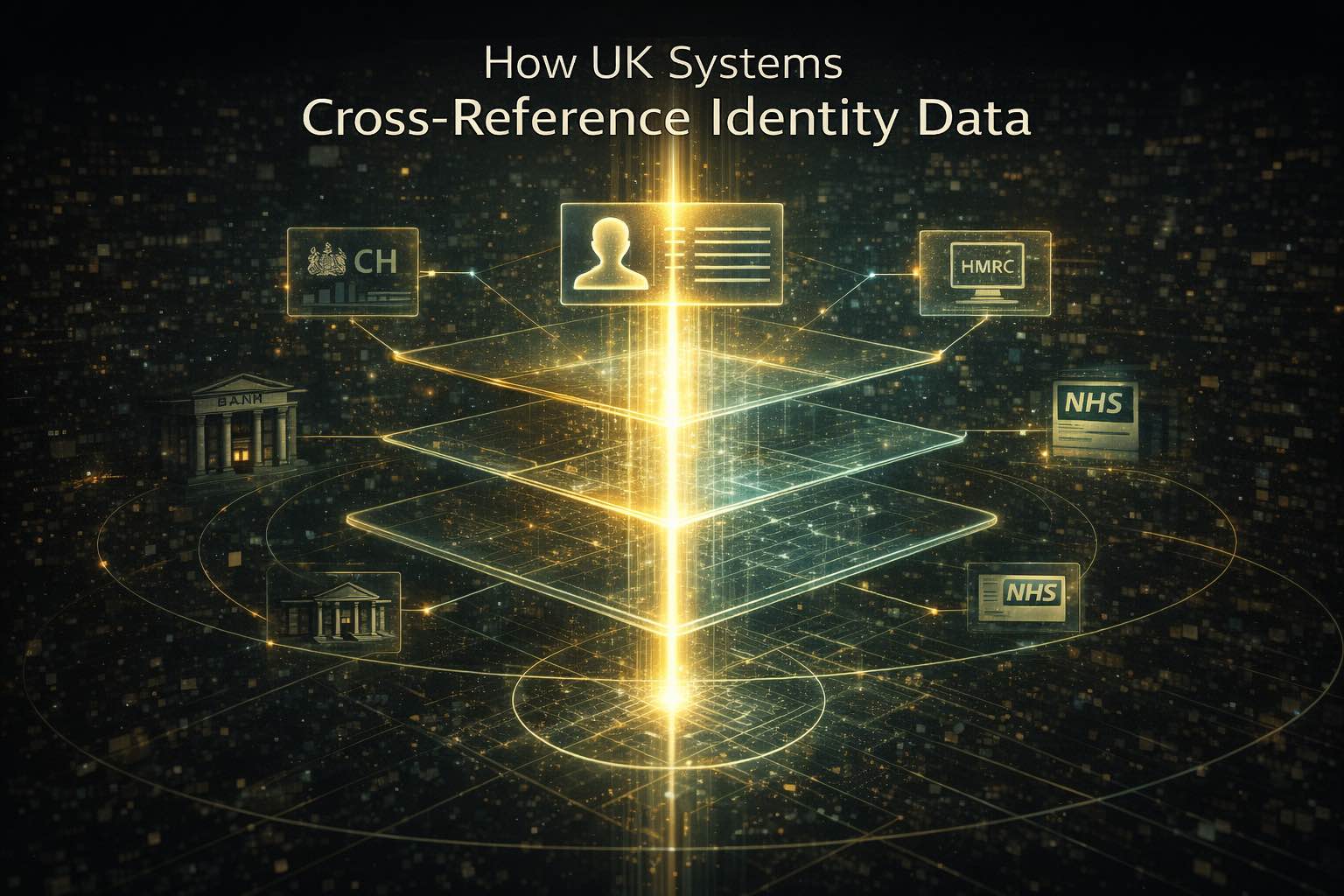
Identity Data Alignment in the UK
How Administrative Systems Cross-Reference Information
In the United Kingdom, identity is not verified in isolation.
Administrative systems operate through layered data alignment - where name, date of birth, address history and reference numbers interact across institutions.
This article explains how UK systems cross-reference identity information at a structural level.
It does not provide legal, financial or immigration advice.
1. Identity as a Multi-Layer Structure
UK identity architecture typically includes:
• full legal name
• date of birth
• address history
• National Insurance number
• reference identifiers (tax, NHS, company, banking)
Each data point functions independently - yet systems assess them collectively.
Alignment increases trust weighting.
2. Cross-Reference Logic
Administrative bodies may compare identity data across:
• HMRC records
• Companies House filings
• banking systems
• credit reference agencies
• NHS administrative data
• council records
Cross-referencing does not mean data sharing in all cases.
It refers to consistency validation between declared and existing records.
3. What Triggers Additional Verification
Additional checks may occur when:
• name formats differ
• dates of birth mismatch
• address timelines conflict
• reference numbers cannot be located
• recent changes appear across multiple systems
• records are newly created
In many cases, the issue is structural inconsistency rather than eligibility.
4. Timing & Synchronisation
Data updates may not propagate simultaneously across institutions.
Common delays occur during:
• first registration in a system
• change of address
• change of legal name
• new tax registration
• company director appointment
Temporary misalignment can occur while systems reconcile records.
5. Risk & Trust Weighting
UK administrative systems often operate on risk-based logic.
Higher consistency typically results in:
• smoother onboarding
• reduced manual review
• faster approvals
• fewer follow-up requests
Inconsistent data may increase verification intensity.
6. Why Alignment Matters for Newcomers
For individuals new to the UK system, identity records are often created sequentially.
Because systems rely on prior data, early inconsistencies may create friction later.
Structural coherence improves administrative stability.
7. Stability Principles
System clarity improves when:
• names match official documentation exactly
• address formatting remains consistent
• reference numbers are used accurately
• updates are introduced gradually
• declared information mirrors official records
Coherence supports administrative continuity.
Final Thoughts
In the UK, identity verification is layered rather than singular.
Understanding how systems cross-reference data reduces friction across banking, tax, healthcare and company administration.