.svg)
Digital Identity in the UK: Why Verification Feels Strict
An evergreen system-level overview explaining why identity verification in the UK often feels strict, how cross-system referencing works, and how data consistency influences administrative outcomes.
Clear, information-only updates on how key UK systems work — from healthcare and identity checks to everyday administrative steps.
No opinions. No advice. Just structured information to help you navigate your first stages in the UK with clarity and confidence.

Digital Identity in the UK
Why Verification Feels Strict
In the United Kingdom, identity verification is not designed as a single event.
It operates as a layered administrative process used across financial, governmental and healthcare systems.
This article provides a calm, information-only explanation of how digital identity functions within UK administrative architecture.
It does not provide legal, financial, regulatory or immigration advice.
1. Identity as a Structural Layer
Within UK systems, identity serves as:
• a data consistency anchor
• a fraud prevention mechanism
• a regulatory compliance requirement
• a risk assessment input
• an access control trigger
Verification is not primarily about suspicion.
It is about consistency across interconnected systems.
2. Why Verification Often Feels Strict
Verification in the UK may involve multiple checks because systems:
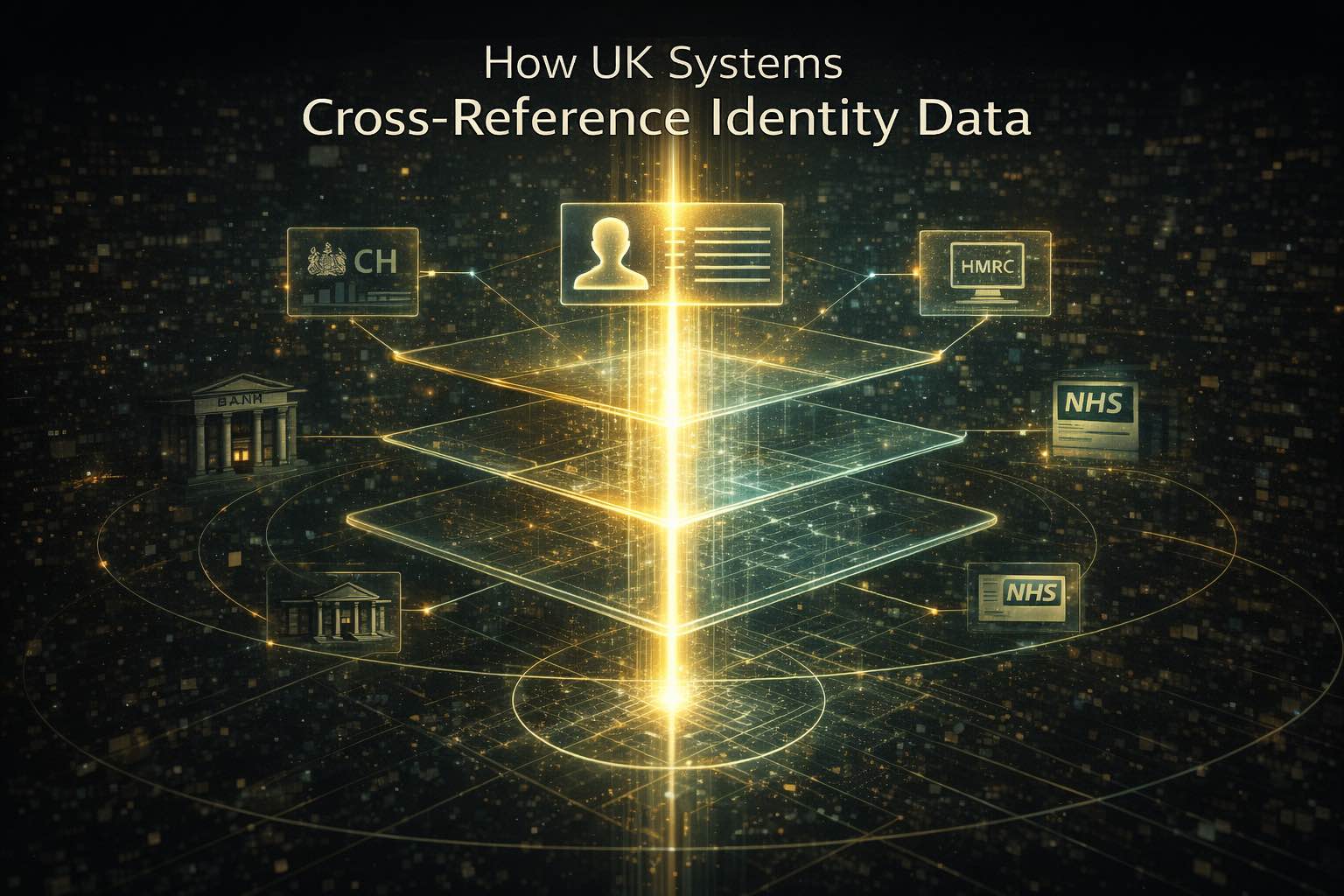
• cross-reference identity data
• confirm address continuity
• assess regulatory obligations
• validate documentation authenticity
• align records across institutions
When information is incomplete or inconsistent, additional verification steps may occur.
This reflects system design rather than personal evaluation.
3. The Core Identity Components
UK administrative systems commonly rely on a combination of:
• name consistency
• date of birth
• address history
• biometric or document validation
• government-issued reference numbers
No single element operates independently.
Identity confidence increases when data points align.
4. Where Digital Identity Is Used
Verification logic affects:
• UK banks and regulated financial institutions
• Companies House filings and director verification
• HM Revenue & Customs records
• NHS digital services
• credit reference agencies
• Right to Work and Right to Rent checks
These systems operate under different regulatory frameworks but rely on aligned identity data.
5. Cross-System Referencing
UK systems do not operate in isolation.
Information may be:
• validated against external datasets
• reconciled during onboarding processes
• reviewed during periodic compliance checks
• reassessed when circumstances change
Verification strictness often reflects regulatory accountability rather than administrative preference.
6. Common Friction Points
Newcomers may experience delays due to:
• limited UK address history
• recent relocation
• name variations across documents
• mismatched formatting
• incomplete record propagation
Most friction arises from timing and data alignment rather than eligibility.
7. Timing and Data Propagation
Identity updates may not synchronise instantly across all systems.
Delays can occur during:
• first-time record creation
• cross-database reconciliation
• compliance review cycles
Understanding this propagation dynamic helps contextualise verification outcomes.
Final Thoughts
Digital identity in the UK functions as a structured trust layer.
Verification strictness typically reflects:
• regulatory design
• data consistency requirements
• cross-system accountability
Clarity about this architecture reduces administrative uncertainty.