.svg)
DBS Basic Check: What Newcomers Should Know (2025–2026)
An information-only overview of DBS Basic checks in the UK in 2025–2026 — what they show, how the process is usually handled, and what issues commonly cause delays. Designed to help newcomers understand onboarding expectations without legal, immigration, financial, medical, or tax advice.
Clear, information-only updates on how key UK systems work — from healthcare and identity checks to everyday administrative steps.
No opinions. No advice. Just structured information to help you navigate your first stages in the UK with clarity and confidence.
DBS Basic Check: What Newcomers Should Know (2025–2026)
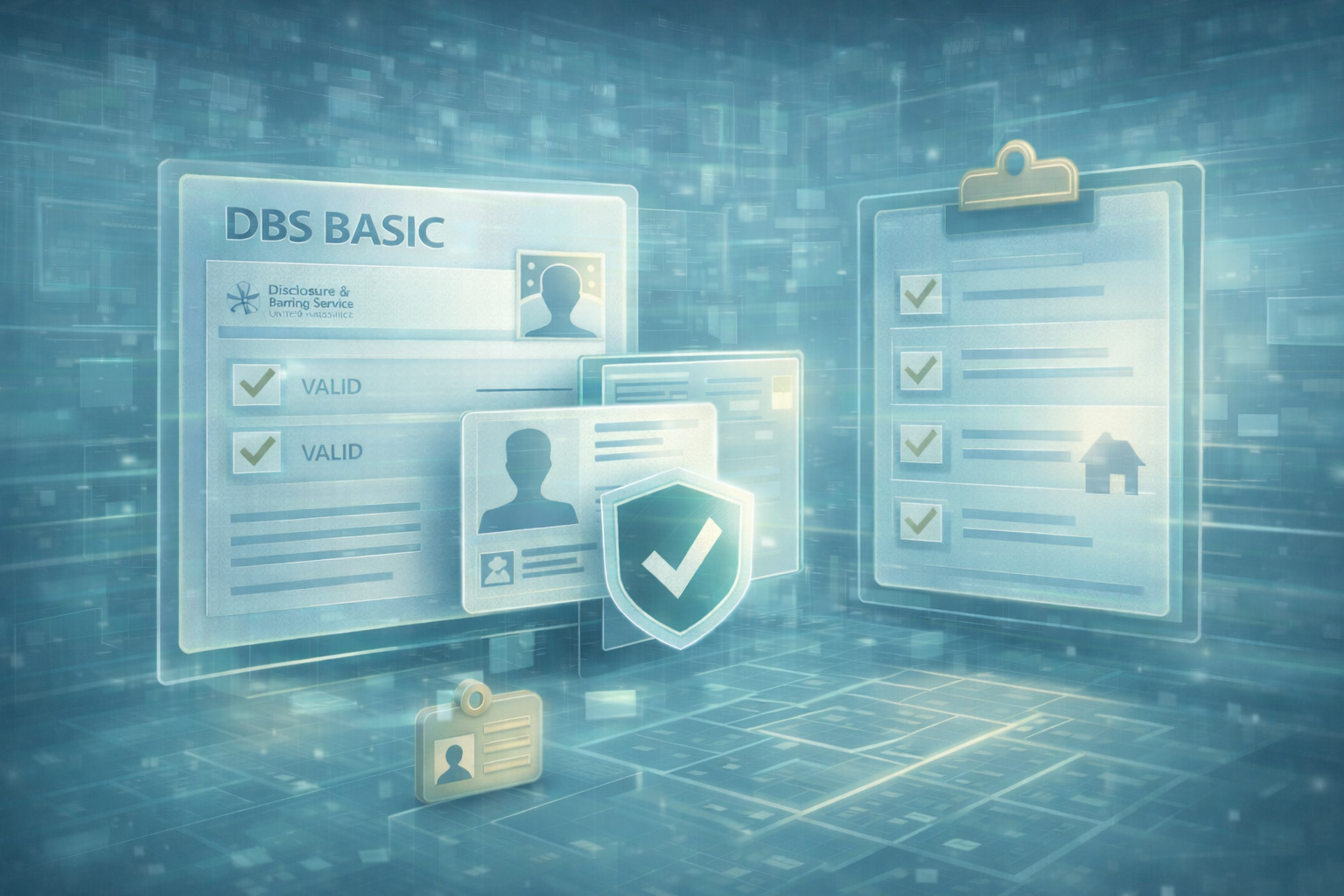
A DBS Basic check is a standard UK background check used by some employers and organisations as part of onboarding.
This guide provides a clear, structured, information-only overview of how DBS Basic checks typically work in 2025–2026 — what they show, what they do not show, and how the process is usually handled.
It does not provide legal, immigration, financial, medical, or tax advice.
—
1. What a DBS Basic Check Is
A DBS Basic is the most common entry-level criminal record check in the UK.
It is designed to confirm whether a person has unspent convictions (as defined by UK rehabilitation rules).
In many cases, it is used as a simple trust-and-compliance step during onboarding.
—
2. What It Shows (and What It Does Not)
A DBS Basic typically shows:
- unspent convictions and conditional cautions (if any)
A DBS Basic typically does not show:
- “full history” in all cases
- information outside the Basic level
- identity, right to work, or immigration status (those are checked separately)
Different roles may require different levels of screening, but DBS Basic is the most common starting point.
—
3. Who Usually Requests a DBS Basic
A DBS Basic may be requested by:
- employers (as part of onboarding)
- volunteer organisations
- agencies for certain roles
- organisations that need baseline screening for trust and safety
They typically provide guidance on which check is needed and how they want it completed.
—
4. How the Process Usually Works (2025–2026)
The process is commonly handled through an approved provider and may include:
- completing an online application form
- confirming identity details (usually based on documents)
- payment (who pays depends on the organisation)
- processing by DBS
- receiving the result (often as a certificate or digital outcome, depending on the route)
The organisation requesting the check usually explains what to share and how.
—
5. Common Issues That Cause Delays
Delays most often happen when details do not match across documents and forms, for example:
- name spelling differences (including middle names)
- inconsistent dates of birth
- address history gaps or formatting differences
- unclear document scans or missing supporting documents
- using different versions of personal details across systems
Accuracy and consistency usually makes the process predictable.
—
6. How DBS Links to Other UK Onboarding Steps
A DBS Basic check often connects with:
- employment onboarding and HR checks
- identity verification and document checks
- right to work confirmation (separate process)
- address history and proof-of-address expectations
It is best understood as one step inside a wider onboarding sequence.
—
Final Thoughts
A DBS Basic check is a standard, predictable screening step when details are consistent and documents align.
A structured, information-only understanding helps you move through onboarding with less uncertainty.
—
If you want a calm overview of how your UK onboarding steps connect, you can request a Clarity Call — and map out your next predictable actions with confidence.